Water Heater Repair in Coney Island, Brooklyn
Reliable domestic hot water is an essential everyday necessity for residential households and multi-family buildings throughout Coney Island. Whether powering morning showers in an attached brick home along Neptune Avenue or supplying commercial-grade hot water demands in multi-family dwellings near Mermaid Avenue, water heaters operate under continuous municipal water pressure and high thermal stress. When water heaters leak, pilot burners blow out, or hot water runs out within minutes, our certified technicians diagnose and repair the malfunction promptly.
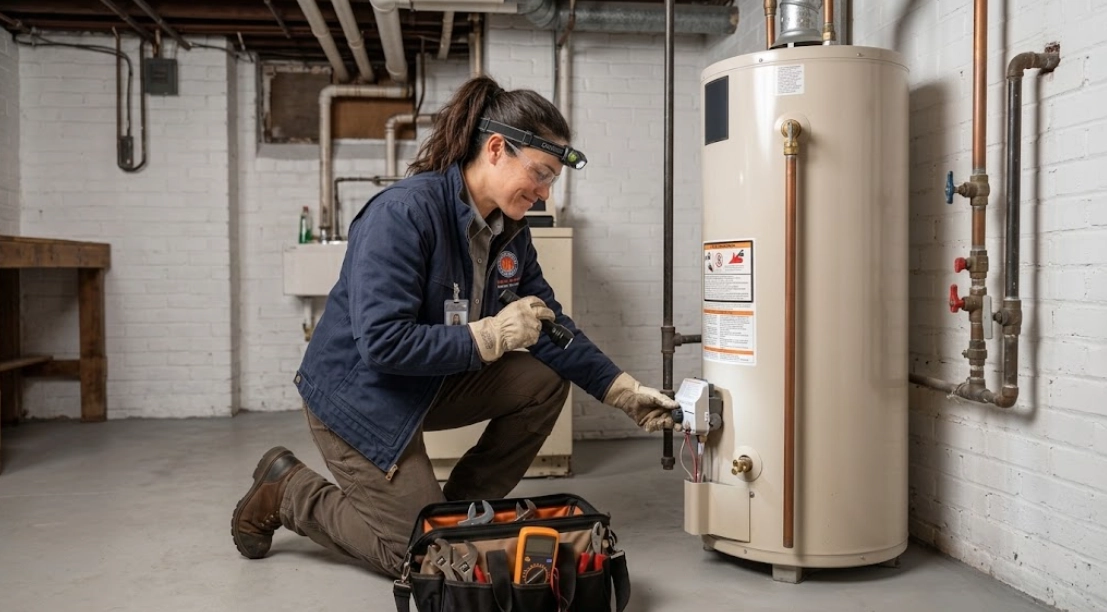
Common Water Heater Warning Signs & Symptoms
Recognizing early warning signs allows homeowners to schedule repairs before a complete water heater shutdown or devastating basement flood occurs:
- No Hot Water: Faucets running completely cold indicates an extinguished pilot flame, a tripped high-limit thermal switch, a defective electronic ignition module, or a burned-out heating element in electric units.
- Inconsistent or Rapidly Depleting Hot Water: Hot water that runs lukewarm after a few minutes frequently indicates a fractured internal dip tube (which allows incoming cold water to mix directly with outgoing hot water at the top of the tank) or heavy sediment accumulation displacing heated volume.
- Water Pooling Around the Tank Base: Moisture collecting beneath the water heater must be diagnosed immediately. It can stem from a repairable leaking temperature-and-pressure (T&P) relief valve, loose threaded pipe nipples, or internal tank fracture.
- Popping, Rumbling, or Kettle Sounds: Severe rumbling or boiling sounds during heating cycles indicate dense mineral sediment on the tank floor. Trapped water boils beneath the sediment layer, creating steam pockets that pop violently against the steel base.
Gas vs. Electric vs. Indirect Boiler-Fired Water Heaters
Homes across Coney Island and southern Brooklyn utilize diverse water-heating configurations. Distinguishing between equipment types ensures accurate diagnostic testing:
Atmospheric & Power-Vent Gas Water Heaters: The most prevalent system across Brooklyn, gas water heaters rely on a gas control valve, burner orifice, thermocouple/thermopile, and flue baffle. Corrosive coastal ocean air can cause pilot orifices to clog or create draft back-spill that trips thermal cutoff switches.
Electric Water Heaters: Found in apartments and buildings without direct gas hookups, electric water heaters utilize upper and lower immersion heating elements governed by separate surface-mounted thermostats. Burned-out lower elements or tripped reset buttons are frequent service calls.
Indirect Water Heaters Connected to Boilers: Popular in multi-family properties, an indirect water heater operates as a dedicated zone off your central heating boiler. Heated boiler water circulates through an internal stainless steel or copper coil inside the domestic tank. When an indirect system fails to produce hot water, the fault often lies with a failed zone circulator pump, aquastat, or zone valve rather than the tank itself. Learn more about how we maintain central heating boilers on our boiler repair in Coney Island page.
Repair vs. Replacement Considerations
Determining whether to repair an existing water heater or invest in a new installation depends on where the failure has occurred:
- Repairable Components: Thermocouples, thermopiles, pilot burner assemblies, gas control thermostats, electric elements, upper/lower thermostats, drain valves, brass unions, and temperature-and-pressure (T&P) relief valves can all be replaced economically on an intact tank.
- Mandatory Replacement: If water is actively leaking directly from the steel vessel beneath the jacket, the internal glass lining has failed, allowing water to corrode through the steel shell. A leaking pressure vessel cannot be welded, patched, or epoxied safely. Replacement is mandatory.
- Tank Age Past 10–12 Years: Standard tank water heaters have an average operational lifespan of 8 to 12 years in coastal Brooklyn. Continuing to replace multiple mechanical components on an aged tank approaching failure is rarely cost-effective.
Preventive Maintenance & Sediment Flushing
Municipal tap water carries dissolved minerals that settle to the bottom of the water heater tank over time. In gas water heaters, this sediment forms an insulating thermal blanket that forces the gas burner to run longer and hotter to heat the water above it. This overheats the tank bottom, breaks down the protective glass lining, and accelerates tank failure.
We recommend periodic sediment flushing and checking the sacrificial magnesium or aluminum anode rod every two to three years. The anode rod deliberately corrodes to protect the steel tank from rust; replacing a depleted anode rod before it dissolves entirely doubles the service life of your water heater. If fuel delivery issues arise, explore our certified gas line repair and inspection services.
Frequently Asked Questions About Water Heater Repair
The most common culprit is a degraded thermocouple or thermopile that fails to generate the millivolt voltage required to hold the internal gas safety valve open. Other frequent causes include a clogged pilot burner orifice, an open thermal cutoff switch, or strong drafts across basement floor air intakes.
An indirect water heater is a heavily insulated storage tank containing an internal heat exchanger coil piped directly to your central heating boiler as a dedicated zone. Hot boiler water circulates through the coil to heat domestic tap water efficiently, providing exceptional recovery volume without needing a separate gas burner or flue pipe.
If water is actively leaking from the steel tank body beneath the outer metal casing, the internal glass lining has fractured, allowing water to corrode through the pressure vessel. A leaking tank cannot be safely patched and requires full replacement. Leaks from external brass pipe fittings, shutoff valves, or temperature-and-pressure (T&P) relief valves, however, can be repaired.
A sudden loss of hot water capacity usually points to a broken internal dip tube, heavy mineral sediment buildup displacing hot water volume at the bottom of the tank, or a burned-out lower heating element in an electric water heater.